

Facebook Fired Me for a Holiday I Didn’t Take.
And what an access badge log can teach you about how tech firings actually work.

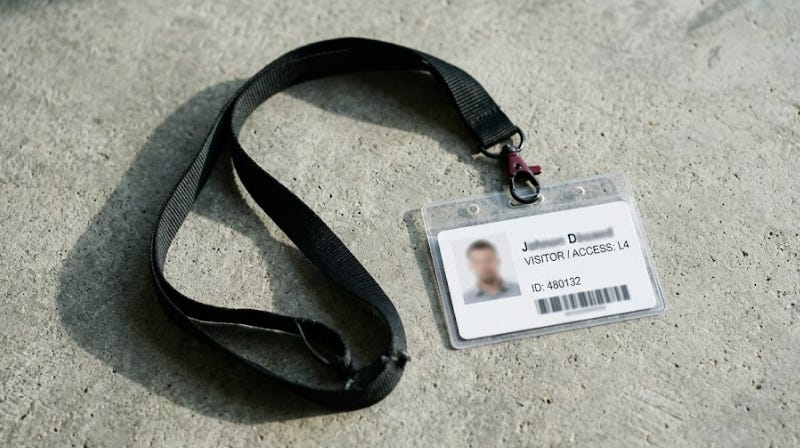
There is a database somewhere inside Meta that contains the dates and times I badged into the (then)Facebook office in San Francisco. Every morning. Every evening. Coffee runs in the middle of the day. The whole log.
I know it exists because I was the one swiping the badge.
I mention this because the stated reason for my firing was that I had “gone on holiday and not told anyone.” I had not gone on holiday. I had asked my manager. I had flown to the San Francisco office on flights Facebook had booked and reimbursed. I had badged in every day. The access log would have shown this in about four seconds of querying. Nobody queried it.
That is what this piece is about. Not the holiday-that-wasn’t, not the meeting where they told me, not even the firing itself. It is about the gap between the stated reason for a tech firing and the real one, and the years some of us spend torturing ourselves trying to reconcile the two before someone tells us we don’t have to.
The Meeting
I had been at Facebook for less than a year.
I will not tell you the team or the manager or the HR person, because the deal I have made with myself about writing publicly is that I do not name names. But I will tell you the shape of the meeting, because the shape is the thing.
The shape was: a calendar invite from someone I did not normally meet with. A title that said something neutral. A room I had not been in before. HR was already inside it when I arrived, not making eye contact. A second person I did not recognize, sitting slightly apart. A folder. A folder is always a tell. If there is a folder, there is a script, and if there is a script, the meeting is not a conversation.
The conversation, such as it was, lasted seven minutes. I remember looking at my watch, and for about two weeks afterward, I could not stop trying to find the moment where I might have changed the outcome by saying something different. There was no such moment. The script had been written before I sat down.
The reason given was that I had taken time off without notifying anyone. That this had caused disruption. That this constituted a violation of policy serious enough to terminate.
I said: I was at the San Francisco office. I asked my manager. I badged in every day.
The HR person said: This decision has already been made.
I said it again, more slowly, in case the first time had not landed: I was at the San Francisco office. The badge log will show this. You can check. You approved my flight expenses.
The HR person said: This decision has already been made.
I left the building ten minutes later with a confidentiality agreement and a promise that the contents of my desk pedestal would be shipped to me.
The First 48 Hours
I would like to tell you that I walked out of the building furious. That I knew immediately that this was unjust, that I called a lawyer, that I sent a sharply worded email demanding the badge log be reviewed.
I did none of those things. What I did was go home and lie on the floor of my flat for an indeterminate number of hours, composing, in my head, the better-sharper-more-credentialed version of the meeting I should have had. Drafts of the things I should have said. Drafts of the better-sharper-more-credentialed version of myself who would not have been fired in the first place.
The thing nobody warns you about being fired in tech, particularly when you are early in your career, is that for the first 48 hours, your brain will refuse to accept that the decision was about anything other than you.
Your brain is an extremely well-trained pattern-matcher, and the pattern it has learned over twenty-something years of school and work is: if a bad outcome happens, look for the thing you did wrong.
So that is what your brain does. It scans backward through every meeting, every Facebook message, every tone of voice, every moment you said the wrong thing or did not say the right thing, looking for the input that produced the output. It will find some. It will find more than some.
It will produce, by about hour 36, a coherent narrative in which the firing was the inevitable consequence of your specific failures of character, and you will believe this narrative completely.
What broke that narrative, for me, was a group of engineers.
I did not get to say goodbye to them.
That is worth pausing on, because it is one of the small, deliberate cruelties of how tech firings are administered, and almost nobody talks about it.
After the meeting, HR escorted me out of the building.
I was not allowed to return to my desk.
I was not allowed to message my team.
I was not allowed to explain what was happening or where I was going.
So my team spent that afternoon looking for me.
Sending Facebook messages I could not see. Wondering where I had gone. Some of them, I learned later, asked my manager, who I assume said something carefully scripted and unhelpful.
They figured out what had happened by piecing it together over the next 24 hours, in the absence of any official communication, the way people figure out anything in tech: by triangulating between a sudden account deactivation, an unanswered email, and the conspicuous silence of a manager.
And then, two nights later, they took me to a cheese and champagne bar.
I will not name them, because they did not sign up to be in this essay, but I will say this: they were the people who actually worked with me.
They knew where I had been the week of the supposed “holiday” because they had been on the other end of my messages from the SF office, in the SF time zone, every day.
They knew the stated reason was nonsense before anyone explained it to them, because they already had the data.
They did not deliver any of this in a speech. They delivered it the way engineers deliver most things, which is by ordering more cheese and asking what I was going to do next.
The implicit message - that the firing was a story written about me, not by me, and that the people who actually knew my work were not buying it - was the most useful thing anyone communicated to me that month.
It might have been the most useful thing anyone communicated to me that year.
I threw up later that night, in a bin near the bar, from the champagne. Not from the firing. There is, I think, a meaningful difference.

I love and miss those guys.
The thing I want to tell the version of myself who was lying on the floor 48 hours earlier is the thing the engineers told me without saying it, by ordering another bottle:
The stated reason for a tech firing is almost never the real reason.
And the stated reason does not even need to be true.
It only needs to be a story HR can write down.
What Was Actually Happening
I do not know for certain why I was fired. I have theories. Most of them are unflattering to the people involved and impossible to prove, which is why I will not write them here.
But I know what wasn’t happening, because I have the receipts.
I had not gone on holiday. The access log would prove it.
My flights to San Francisco had been booked through the corporate travel system and reimbursed by Facebook itself - a paper trail in a second database, sitting alongside the badge log, also unconsulted.
The performance reviews on file said I exceeded expectations. There was no PIP, no warning, no documented coaching, no progressive discipline of any kind.
The official story was, to use a precise technical term, made up.
What this taught me - eventually, after about two years of unproductive shame - is something I now think every engineer, PM, and operator in tech should be told on day one of their first job.
A firing in a large tech company is rarely a referendum on your work. It is the output of a system.
The inputs to that system include headcount targets, calibration outcomes, your manager’s standing with their manager, who has a sponsor and who doesn’t, whether you have made yourself politically inconvenient to someone who matters, and, yes, sometimes your work.
But the inputs do not include a careful audit of whether the stated reason for your firing is true.
Nobody pulled the badge log. Not because the badge log did not exist. Because the badge log was not relevant to the system that had already decided.
This is the part most career advice will not tell you, because it is depressing and it does not fit on a LinkedIn carousel. But it is the part that will save you years of pointless self-interrogation:
The official paperwork on a firing is a post-hoc justification, not a diagnosis.
It is written after the decision to make the decision defensible. It is not designed to be accurate. It is designed to be unappealing.
If you spend the next two years of your career trying to figure out what you did wrong by analyzing the stated reason, you will fail.
The stated reason is not the data. It is the cover story.
What I Wish I Had Done
I am not going to pretend I have a clean five-step framework here, because I did almost everything wrong in the moment and most of what I learned, I learned later. But three things are worth saying, in case they save someone else the lost time.
Do not sign anything in the room.
They will hand you a separation agreement. They will imply that signing it now gets you the severance faster. It does not. You have time. Take it home.
Have someone who is not emotionally compromised read it. Almost every separation agreement contains language that benefits the company more than you, and almost all of it is negotiable. The rushed signature is the company’s win condition, not yours.
Document Everything
Write down everything you can remember about the meeting within 24 hours, while it is still sharp. Names, times, exact phrases.
Not because you are necessarily going to use it - most people don’t - but because the version of you in three months will need to remember what was actually said versus what your shame brain has rewritten it into.
Memory edits itself in the direction of guilt. The contemporaneous notes are the only honest record you’ll have.
Cut off Communication
Resist the urge to send a perfect, dignified, all-explaining email to your manager or to HR after the fact.
I know you want to. I wanted to.
The email exists in your head as the thing that will make them realize they made a mistake, and they will read it and apologize, and the badge log will be checked, and the record will be corrected.
None of that will happen. The decision is not reviewable. The email will only give them more material for the file. Save it as a draft. Read it in six months. Be glad you did not send it.
The Thing Nobody Tells You
It took me about two years to fully understand that being fired from Facebook was not the worst thing that ever happened to me.
It was not, in the long run, even a bad thing.
The job was not great. The company, as it turns out, was not great. The trajectory I would have been on if I had stayed is, with hindsight, not a trajectory I would have wanted.
But I want to be careful here, because I do not want to write the version of this essay that ends with and it was all for the best.
That essay is dishonest.
At the time, it was awful. It was financially frightening. It made me question things about myself that I did not need to question. I spent money on therapy I did not really have. None of that was character-building in the moment.
It was just bad. The cheese and champagne helped. It did not fix it.
What I want to leave you with is not the redemptive arc, because the redemptive arc is the kind of soft, well-lit story that career advice loves, and the reality of working in tech does not support.
What I Want to Leave You With is This
If you are fired from a tech company, the stated reason is the cover story. The real reason is somewhere in a system you do not have access to, and you will probably never see it. Do not spend two years trying to reverse-engineer the badge log of your own competence from a press release written by people who never checked the badge log.
The work you did was real. The reason they gave was not. Both of those things can be true at the same time, and the sooner you accept it, the sooner you get to the part of your life where this is a story you can tell on a Tuesday, with a coffee, on the internet, without your hands shaking.

If This Resonated With You
We’re so grateful to Louise Deason for allowing us to share her story here on Code Like a Girl. If this resonated, don’t just read it. Follow her work. Writers like this deserve readers who show up.

Her story was originally published on Technically Feasible.

Most of what gets written about women in tech stays at the surface. We don’t.
Code Like a Girl publishes three times a week with stories, tutorials, and hard-won lessons from women who are building, leading, and refusing to stay quiet.
If you’re not subscribed yet, start there. It’s free.
If you’re already here and ready to go deeper, Her Edge is a monthly paid column from our founder, Dinah. She spent twenty years in tech, hit that ceiling herself, and came out the other side as a VP who retired at 43.
Each month, she shares the specific frameworks that broke through it.
 | A guest post by
|
This reasonated with me. I was fired out of the blues. I spent almost a year thinking I was the problem. But I wasn't. Thank you very much for sharing this.
Thank you for sharing such a vulnerable experience 🫂... It's never easy to start fresh, but sometimes it means better opportunities are ahead.