

When Performance Feels Invisible
I optimized the code. Then I realized I needed to optimize myself.

We often talk about performance in terms of product: page load speed, smooth interactions, or optimized queries. But there’s also personal performance. And the pattern is strikingly similar:
If your performance is bad, it gets noticed quickly.
If it’s good, and you don’t make it visible, it often goes unnoticed.
That’s the paradox: performance, whether in code or in people, only becomes visible when it fails.
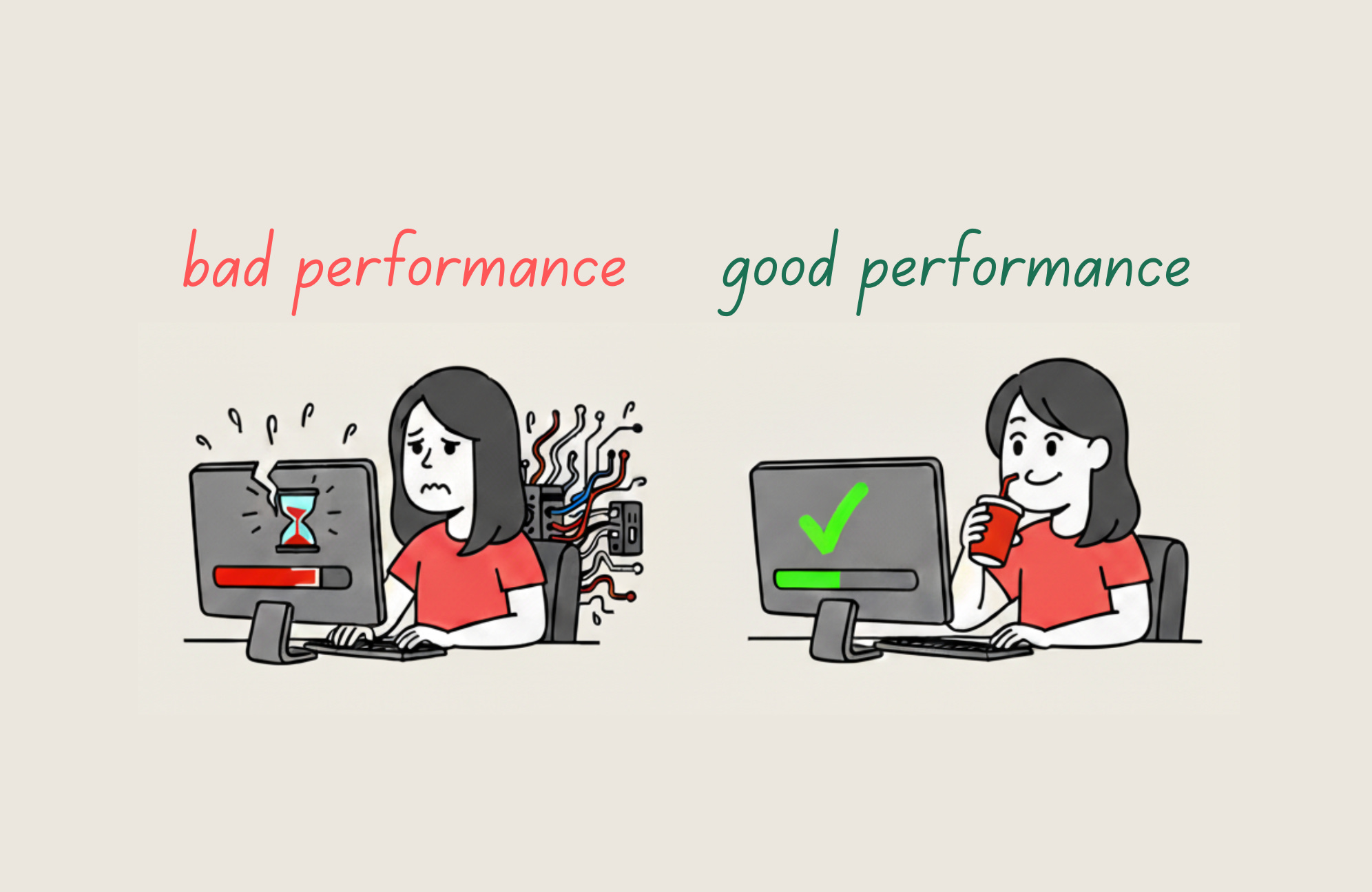
Most of the time, performance work doesn’t get celebrated. No one will thank you for shaving 200ms off a page load, or for getting the Lighthouse score from 70 to 90. Users rarely notice when things are fast. They only notice when things are slow.
And yet, performance is one of those invisible layers that holds everything else together. A delightful UI, a clever feature, even strong product-market fit, all of these can be undone if the experience feels sluggish.
I once worked on a platform where customers could book services online. The process seemed simple enough: select a date, confirm details, and finalize the booking. But the backend wasn’t optimized, and the confirmation step could take several seconds to complete. What we saw in the analytics was painful. Users would wait, get frustrated, and abandon their booking halfway through.
It wasn’t that the product lacked value. It was the delay that broke trust. If a system feels slow when handling something as simple as a booking, users start questioning: Will the service itself also be unreliable?
Performance wasn’t on anyone’s radar until those drop-offs started costing real money. And then, suddenly, invisible work became urgent work. We optimized the queries, reduced payload size, and introduced prefetching. The fix wasn’t flashy, but the numbers told the story: completion rates climbed back up, and revenue followed.
On another project, the team had learned from past pain. Before rolling out a new onboarding flow, we treated performance as a first-class requirement. We measured every step on slower devices, mocked real-world network conditions, and cut unnecessary re-renders.
The result? Users breezed through signup without friction. Nobody praised the “fast onboarding,” but adoption numbers spoke for themselves, more users completed the flow, and fewer needed support.
That’s the reality of performance. It rarely produces shiny demos or screenshots you can show off in a presentation. You can’t point at a static image and say: “Look, this loads in 400ms instead of 1.2s.” The impact is real but subtle, like good design or good writing. It shapes the experience without drawing attention to itself.
And it’s the same with personal performance.
I remember working on a prominent feature that solved many pain points for users. It took weeks of thought, testing, and late-night debugging. When it shipped, the feedback from customers was fantastic. It really made a difference.
But inside the company, my work went almost unnoticed.
Why? Because I didn’t step up and showcase it. I thought the impact would speak for itself, but the reality is that invisible work often stays invisible unless you give it a voice.
That’s when it clicked for me:
Product performance should stay invisible, but personal performance shouldn’t.
Conclusion
Product performance and personal performance share the same paradox. If either one is slow, clunky, or unreliable, people notice instantly. If it’s smooth and reliable, it quietly disappears into the background.
Which means two things:
On the product side, invisibility is a win. The less users think about speed, the better.
On the personal side, invisibility can hold you back. If you don’t make your contributions visible, people might never realize the effort behind the smooth outcome.
✨ Takeaway
Good performance, whether in products or people, is invisible by default. The difference is: in code, that’s success, in your career, that’s a missed opportunity unless you make it visible.
Author Spotlight
We’re so grateful to
for allowing us to share her story here on Code Like A Girl. You can find her original post linked below.
If you enjoyed this piece, we encourage you to visit her publication and subscribe to support her work!

Join Code Like a Girl on Substack
We publish 2–3 times a week, bringing you:
Technical deep-dives and tutorials from women and non-binary technologists
Personal stories of resilience, bias, breakthroughs, and growth in tech
Actionable insights on leadership, equity, and the future of work
Since 2016, Code Like a Girl has amplified over 1,000 writers and built a thriving global community of readers. What makes this space different is that you’re not just reading stories, you’re joining a community of women in tech who are navigating the same challenges, asking the same questions, and celebrating the same wins.
Subscribe for free to get our stories, or become a paid subscriber to directly support this work and help us continue amplifying the voices of women and non-binary folks in tech. Paid subscriptions help us cover the costs of running Code Like A Girl.
 | A guest post by
|
The booking platform example is really good! Nobody notices performance until it costs money. Users don't praise fast load times; they just leave when things are slow. That's the nature of good engineering: it disappears into the background.