

You are Already Technical Enough for AI
Why relational skills are becoming the new technical skill

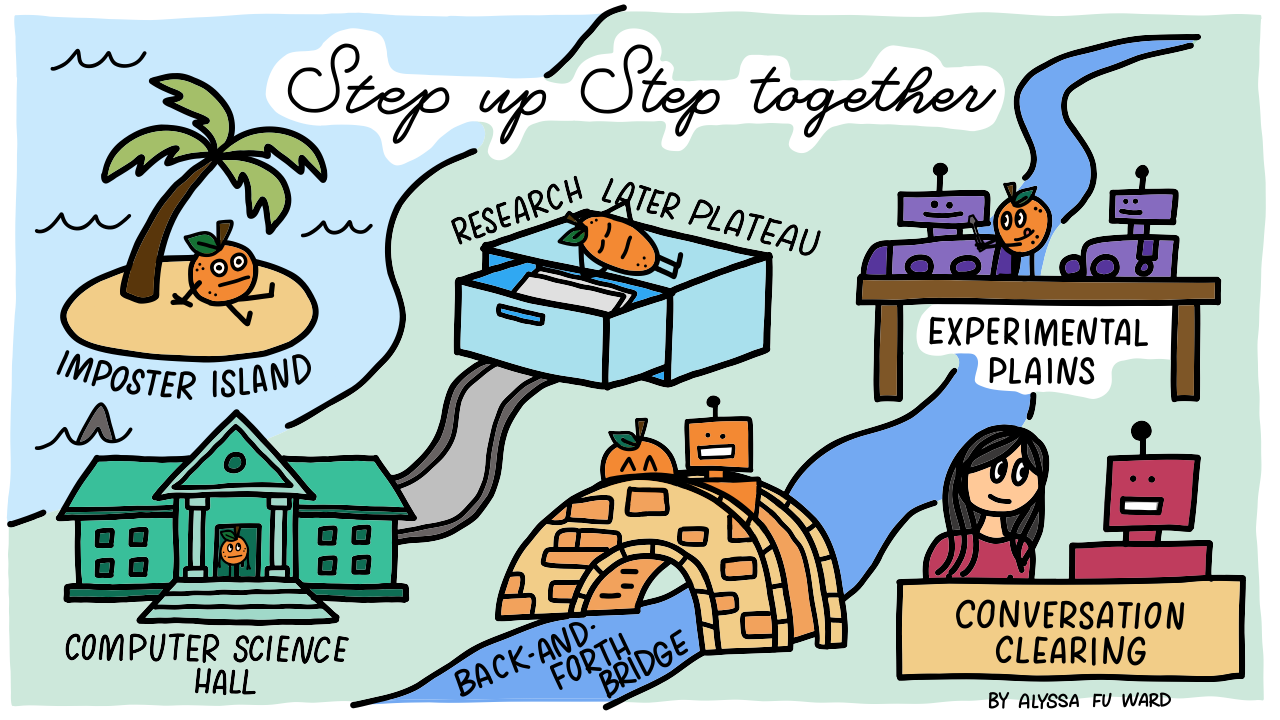
Only 35% of the technical workforce are women. Somehow, I became one of them.
I didn’t set out to pursue a technical role. As an undergrad, I was drawn to understanding how humans worked. I cultivated that passion, and it led me to earn a PhD in psychology from Stanford. Then, I made a sharp turn into data science and managed to land jobs at Twitter and Meta.
While I look successful on paper, internally, I’m just me.
I’ve experienced imposter syndrome and burnout.
I took a mental health leave.
I’ve been laid off.
Several years later, I’m still a data scientist, and last year, I started using AI daily for tasks across coding, developing business plans, and cooking dinner.
My journey is unique to me, but my experiences and learnings are not.
Many of us who have worked in tech – or wanted to – have felt pressure to prove that we are technical enough.
We’ve also felt the sting from pushback that seems to confirm that fear and say:
“That’s right. You aren’t technical enough.”
Sometimes it comes from the situation and the people in it.
Sometimes it comes from inside ourselves.
On the surface, AI could look like yet another shiny invention. A technical tool created by tech bros who have highly specialized technical skills and knowledge.
The latest iteration of the game:
“Do you belong here?”
But reality suggests otherwise.
AI is not just another technical tool – it’s a relational one.
Because of that, AI is changing what “being technical enough” means – especially for women.
This AI Thing is Going to Change Everything
Born of computer science and finely tuned by machine learning engineers, AI is as technical as technologies come. Early use cases focused on image recognition and autonomous robots.
When ChatGPT dropped into society in November 2022, the chatbox human interface was flashy, but all the talk was focused on LLMs and very impressive Generative AI.
To me, “LLM” and “GenAI” were just two more technical terms that belonged in my mental filebox labeled:
“Technical stuff I’ll research when I have time.”
(And I never made the time.)
The first tests I did with ChatGPT were me commanding it
“Create a silly poem.”
“Write me a SQL query.”
The responses were sometimes entertaining, sometimes decent, and not that helpful.
Several months later, I tried again.
I asked ChatGPT to create a business plan for my executive coaching business. I brain-dumped various groupings of thoughts, then clicked “Submit.”
Text flew across the screen. The response beautifully elaborated my brain-dumped scratch notes. Not only that, but it took the burden off of me to figure out how the heck to set up a business plan I had no idea how to build.
I felt myself grin.
A zing coursed through my body and fired one thought off out of my brain:
“This AI thing is going to change everything.”
Two Worlds of AI
Once I experienced the realization of AI’s potential, I started using it almost every day.
I frequently asked it to explain itself. I built custom GPTs to analyze data and surgically added instructions one session at a time to try to catch every case of hallucination.
I saw how easy it was to create a prototype, and how hard it was to make the AI solution trustworthy enough to put in the hands of a user.
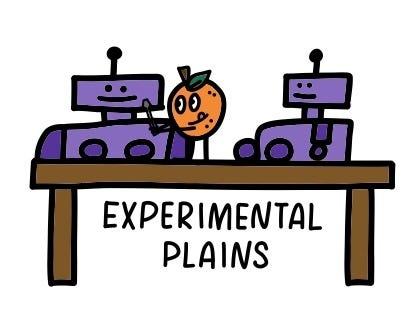
As I became a power AI user, I also had the curious feeling that I was working in two different AI worlds.
What others called “prompt engineering,” I saw as describing clearly my intentions and goals to the AI.
Where they said, “Provide context,” I saw natural follow-ups to redirect the AI when it veered off course.
For the most part, I filtered out the engineering-speak to focus on how I could fit AI seamlessly into how I worked. And it wasn’t through perfectly crafted prompts, that’s for sure.
But some phrases, like “build an agent,” stopped me short.
Was my data analysis a custom GPT agent?
According to “official” definitions, I thought so. But when I asked other AI experts what they thought, their faces would squinch. I couldn’t get a straight answer.
My metaphorical fingers started reaching for that mental filebox, and a small voice inside whispered,
“What am I missing? Am I just not technical enough for this?”
“That’s it?” Working with AI is just talking with AI
One of my coworkers posted on LinkedIn about becoming a new manager of a team of eight …agents that he built in Claude Code.
I immediately asked if we could meet so I could see what he did. I requested a license, and as soon as I got approval, I rolled up my sleeves and dove in.
In plain words, I told Claude Code, “Create an agent that can…” followed by a detailed description of what I wanted the agent to do.
And then Claude Code just …made it.
Code burst across the terminal, and errors flashed on and then off. Through it all, Claude Code shared its thoughts between scrolling code blocks. The “Ah ha!” and “I’ve found the bug!” messages were endearing. I was dumbstruck.
“That’s it? I can just talk to it?”
As I work more with AI, this cycle is becoming a familiar refrain:
A new AI thingy pops up
→ My cortisol spikes in response to another technical tool
→ I feel pressure to master it
→ I test the thing
→ I realize that, at its most basic, I’m still just talking with an AI.
That small voice that asked, “Am I technical enough?” is piping up less often.
Now the question that is emerging is:
“What can I do next?”
Relational is the new technical
One of my earliest posts on Substack was about my first experience using ChatGPT. At the end of the post, I predicted that AI would be as ubiquitous as word processors or email.
Three years later, almost to the day, I see now that AI goes far beyond the impact of past technical tools.

AI is well on its way to changing what it looks like to be technical as we know it.
Instead of using precision, logic, and code, working effectively with AI looks like noticing where interpretations can diverge, clearly stating intended goals, and adjusting responses together with AI.
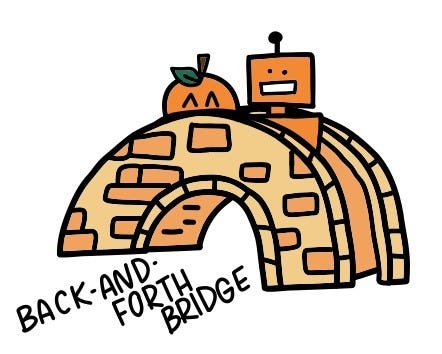
These are all skills we use to navigate real human interactions.
Women in particular are socialized to practice these skills — except in the workplace, where women who exercise their relational selves are often penalized.
I’m ready to shed the constraints that come from shoving myself into a box of “technical expertise” that wasn’t made for me.
I already feel it happening when I work with AI on improving technical infrastructure.
I get to do what I do best — planning, setting vision, defining requirements, and asking questions. The AI gets to do what it does best – managing the technical implementation and creating meticulous documentation.
As AI opens opportunities for women who work in tech or want to work in tech, my hope is that — not only that we are active participants — but we can shape what the future will look like together.
You Belong Here
As I reflect on my career so far working as an academic, data scientist, executive coach, and now power AI user, I have a strong conviction that this moment is for anyone who wants to participate in it. Not only because we want to, but because we can.
AI is not just another technical tool. And the barrier to entry has dropped significantly.
Beyond helping us do our work faster, the real value of AI is that it’s changing what we used to think was possible.
It’s changing what we thought we could do with technology and who was allowed to use it.
AI can be used by anyone.
And getting better at using it won’t come from taking engineering classes.
It’ll come from being able to better articulate your thoughts, consider multiple interpretations, and being willing to try again and again.
There will still be a need for technical skills as we’ve traditionally known them. But the way we will learn and use those skills will change.
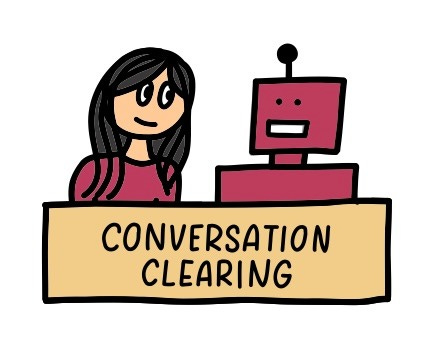
Instead of being potential sources of judgment, asking technical questions will become seeds for conversations of growth – and fun – with a supportive partner who patiently meets you where you are.
The world is changing so fast. But the rules are still being written.
Use the unique set of experiences, thoughts, and connections that only you can make to decide how you work with AI. You have the agency to decide what you’ll do with the responses AI returns to you.
It’s not too late to grow from where you are standing, and you don’t need anything more than what you have right now to use AI.
Start by having a conversation.
Author Spotlight
We’re so grateful to Alyssa Fu Ward, PhD for allowing us to share her story here on Code Like A Girl. If you enjoyed this piece, we encourage you to visit her publication and subscribe to support her work!
Recommend a Woman in Tech Today
Most people assume great writing rises on its own.
It doesn’t.
We are on a mission to increase the number of women on the Technology Best Sellers and Technology Rising Lists on Substack. Right now, the list contains roughly 10-13% women. We would like to see that number at 50%.
On Substack, recommendations are the distribution layer. They decide who gets surfaced, followed, and paid attention to.
We’ve subscribed to over 280 women writing about tech, AI, and robotics.
In roughly one-third of recommendation lists we see, women don’t appear at all.
Let’s change that!
Consider recommending a woman or non-binary person on Substack today.
Join Code Like a Girl on Substack
We publish three times a week, sharing technical tutorials, personal stories, and leadership insights from women and non-binary technologists.
Since 2016, Code Like a Girl has amplified over 1,000 writers and built a thriving global community of readers.
What makes this space different is that you’re not just reading stories, you’re joining a community of women in tech who are navigating the same challenges, asking the same questions, and celebrating the same wins.
Subscribe for free to get our stories, or become a paid subscriber to directly support this work and help us continue amplifying the voices of women and non-binary folks in tech.
 | A guest post by
|
Alyssa, I love your article, but I mostly wanted to comment on your AMAZING art! It is so cute and whimsical and I LOVE IT!! It must be so fun to create (and animate?). Love seeing the different ways creative people create besides just words on a page :)
I have so much to say about this post... first of all... the illustrations are *incredible*, and how you pulled them out of the main hero illustration was genius!
The whole time, I was thinking - "which orange am i?" and then I kept going back and forth until I decided I was all of them. 🤣 That made it so much fun for me to read.
But honestly, reading a post like this coming from someone like you (who yes, has some very real credentials) is just so refreshing... relatable.. and overall comforting. You're right, we are all going through AI experiences that are unique to us.... and at the same time, I think that's why so many of us have imposter syndrome! Always wondering if there's a more "technical" way we should be doing things.
But thank you for reassuring us. The message in here definitely makes less ashamed that i'm not the most tech-savvy. And shifts the mindset from "i'm so far behind" to wondering what i can do next :)
Thank you for such a well though-out, beautifully crafted post Alyssa. I genuinely enjoyed it.