

Why You Can't Bring Yourself to Update Your LinkedIn Title After a Layoff.
It’s not denial. It’s grief.

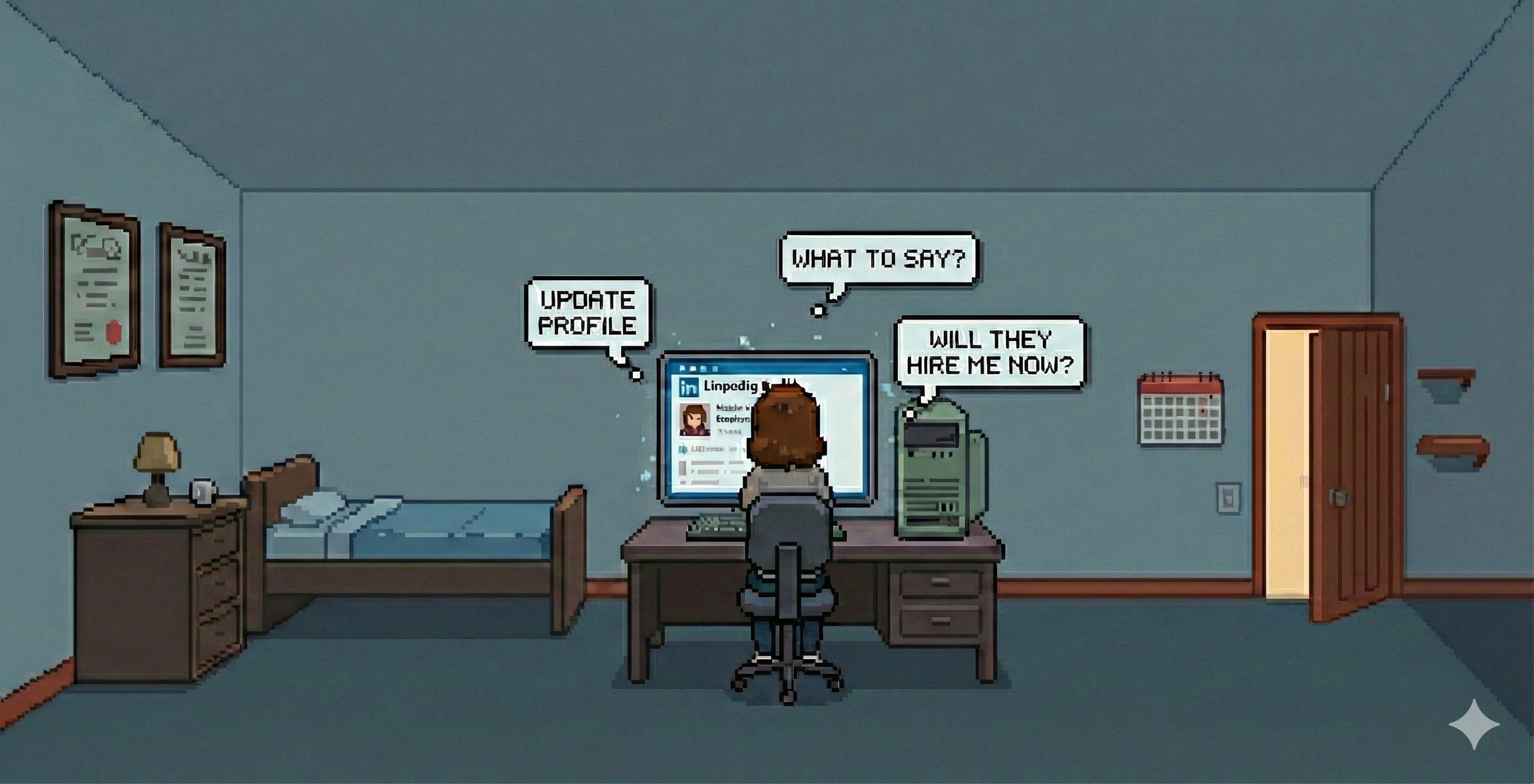
When I got laid off in 2023, I told myself I wanted my job back. What I actually wanted was my people back.
The ones who knew my shorthand. Who I’d grab coffee with before standup just to decompress before the day started. Who would drop a meme in Slack at exactly the right moment when everything was on fire. The ones who made the hard days bearable and the good days actually fun.
That’s what the job actually was. It wasn’t the title or the work or even the paycheck. It was the people I got to do it with.
Welcome to Code Like a Girl, the community where women in tech come to be seen, heard, and championed as they walk this path together.
If you have ever grieved a job and found that no one around you understood you were grieving at all, this is your community.

Welcome to Code Like a Girl, the community where women in tech come to be seen, heard, and championed as they walk this path together.
The Title You Can’t Touch
So the LinkedIn profile just... sits there.
It still shows the company. Still has the title. Still has that version of you that existed before everything changed. And you know you should update it. You know people can see it. But every time you go to make the change, something stops you.
Part of it is shame. Not of the layoff itself, but of not knowing what to say yet. Because the moment you change that title, someone is going to ask what happened. And you’re supposed to have a clean, professional, hireable answer ready. Something that explains everything without revealing too much, that sounds confident without sounding desperate, that acknowledges the reality without making it sound like it was your fault.
But you don’t have that answer yet. You’re still in the middle of it. Still trying to make sense of something that doesn’t fully make sense. And changing your LinkedIn feels like being asked to perform a conclusion you haven’t reached, to have a narrative about something you’re still living through.
So you leave it.
Because at least while the profile stays the same, you still belong somewhere.
The Hope You Won't Say Out Loud
And then there’s the quieter thing underneath all of that. The thing that’s harder to admit.
Maybe they’ll get a round of funding. Maybe things will turn around. Maybe they’ll realize they need you back and the phone will ring and this will all have been a terrible mistake.
It’s not denial exactly. It’s hope. The specific, tender hope that the door might reopen. That you might get to go back to the place where your people are, where you knew how everything worked and everyone knew you, where you had built something that actually mattered.
Because that’s what you’re really grieving when a layoff happens. There’s the financial terror: the COBRA decision you have to make while you’re still in shock, the bills that don’t pause, the healthcare that suddenly has a price tag attached to it. The fear of losing everything. The fear of not finding something new fast enough. That grief is real and terrifying and it deserves its own conversation.
But underneath that, quieter and harder to name, is the grief for your people. The team that felt like yours. The colleagues who became friends. The inside jokes that took months to develop. The Christmas parties. The end-of-day happy hours. Knowing the names of people’s kids, watching them grow up in photos shared over Slack. The funny thing someone’s toddler said. The first day of school pictures. The small human details that made your colleagues real people. The rituals that marked time together that you assumed would just keep happening. The relationships that existed inside that specific combination of people, in that specific place, at that specific time, that can never be fully recreated anywhere else.
And you try to keep it. You text. You check in. For a while it works.
But slowly, without anyone deciding anything, the gaps between messages get longer. What used to just be part of your day now requires effort. It needs scheduling and intention. The relationship that existed so naturally inside the context of work suddenly needs maintenance it can’t sustain.
Nobody ends anything. Nobody ghosts you. Life just quietly fills in the space where those people used to be.
And one day you realize weeks have gone by.
The Like Button and Other Small Tortures
And then the company posts something. A win, a launch. Something you were part of building. And you sit there with your thumb hovering over the like button, frozen. Because liking it feels like forgiving something you’re not ready to forgive. But not liking it feels like punishing your friends who are still there, who worked hard, who deserve to be celebrated. They didn’t do anything wrong. So you hover. Or scroll past. Or like it and feel weird about it for the rest of the day. Nobody warns you about that specific torture.
Then the project you worked on launches. The one you were there for during the hard parts - the late nights, the decisions, the context that only you had. And it ships. And everything is fine. And your name isn’t on it.
Part of you wanted it to fall apart. Not because you’re vindictive, but because you needed proof that you mattered. That your contributions were real and you weren’t just replaceable. When it ships without you and everything is fine, it feels like confirmation of the thing you were most afraid of. That you were just a name on a sheet that was easy to delete.
And then the guilt hits for even wanting that. Because your friends don’t deserve to fail. The people still there, working hard, trying to hold things together - they’re not the ones who hurt you. So you’re angry at the company and guilty about your anger and grieving your own invisibility all at the same time.
And somewhere in all of that, the what if spiral starts. What if you’d spoken up more in that meeting. Volunteered for that project. Been in the room when the decision was made instead of on PTO. Your brain picks a specific moment and decides that was it, that was the hinge, that was where you could have saved yourself.
The list was made in a spreadsheet by someone who barely knew your name. The variables your brain keeps running don’t appear anywhere on it. But your brain doesn’t care about that. It just keeps running the simulation anyway.
And then you have to write the hiring message. While you’re still in that spiral. While you’re still raw and hurt and furious. You’re supposed to sound excited about new opportunities when what you actually want to say is that they made a mistake. That they’re going to realize what they lost. That this isn’t okay and you’re not okay and you want them to know that.
But you can’t say that. So you write something professional and optimistic and you hit post and you feel like a liar.
Layoffs don’t just take your job. They scatter your people, erase your contributions, and leave you replaying decisions that probably never mattered in the first place. And changing your LinkedIn title is the moment you have to admit that the version of you that existed with those people is gone too.
There's No Right Time
So the profile just sits there. Still unchanged. And now you know why.
There’s no right timeline for when you’re supposed to update it. No moment when the grief is processed enough, the narrative is polished enough, the hope has faded enough to make it feel okay. No point where the what ifs stop, where the like button stops feeling complicated, where you stop checking if the project is still going okay without you.
You’ll change it when you’re ready. Or when you have to. Or when someone gently reminds you that it might be time.
I didn’t change it until I got a new job. Not because I’d processed everything or found closure. Just because I had somewhere new to put myself.
But until then, leaving it unchanged isn’t weakness or avoidance or magical thinking.
You’re just not ready to say goodbye to your people yet.

We're grateful to Alex Van Holtz for sharing her work here. If you want a writer who names the quiet, unspoken parts of a career most people skip past, she is worth following.
You Belong Here
A layoff scatters your people, and the grief for them has nowhere to go. Code Like a Girl is the community for women in tech who need somewhere that doesn’t disappear when a job does.
If you are not subscribed yet, that is the place to start. It is free.
You Don’t Need to Do This Alone
Have you ever wished you had someone in your corner who has actually been where you are?
When you go paid, you get direct access to Dinah Davis, founder of Code Like A Girl, via Direct Messaging. You bring your situation. She brings twenty years of having lived it. Together, you figure out your next move.
Once a month, Dinah shares practical steps you can act on right away. Not inspiration. Specific things you can do to advance your career when the system was not built for you.
Summer Out of Office
We’re taking two short breaks this summer: June 27 – July 7 and August 1 – 12.
Read Next


 | A guest post by
|
I think this also explains why so many people struggle to write their "Open to Work" post.
They're not just looking for a job. They're trying to describe themselves without the company they've identified with for years. That's a much bigger shift than updating a LinkedIn headline.
Losing a job can happen in a day. Rebuilding your professional identity usually takes much longer.
When someone loses their job, it's presumed that all their effort goes into finding a new one. Little, if any, thought goes into the transition period when you're effectively grieving the loss of your former workplace and colleagues.
Thank you for such an honest post.